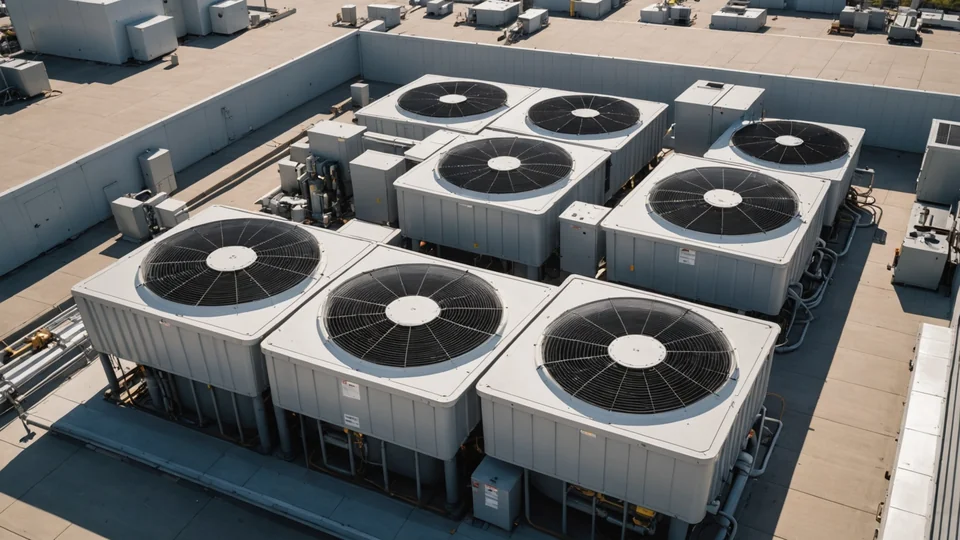
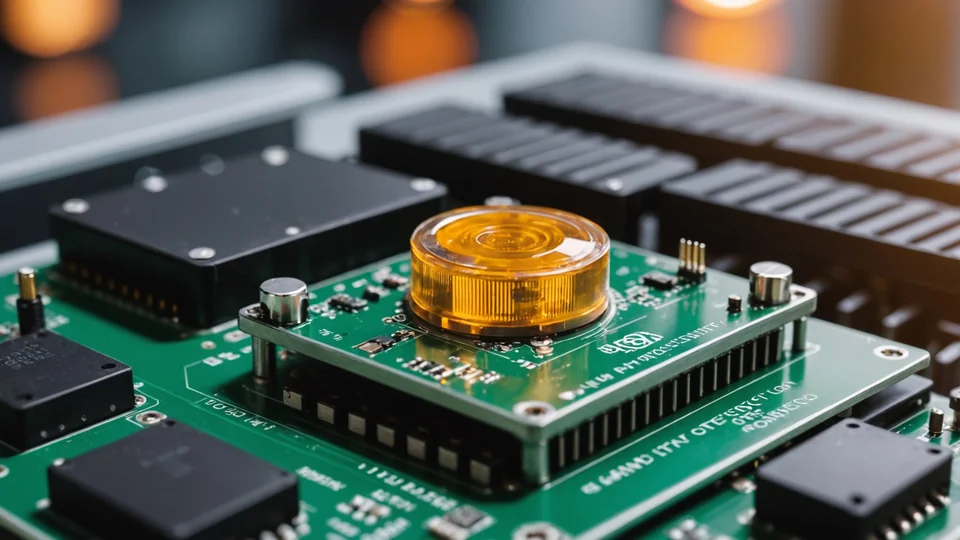
Cold-chain facility operators face a maintenance problem that is categorically different from most other industrial environments. When a compressor fails in a manufacturing plant, you have downtime and a repair bill. When a compressor fails in a cold-chain warehouse, you have downtime, a repair bill, and potentially $80,000–$400,000 in spoiled inventory depending on what you were storing and how long the temperature excursion ran. The stakes of unplanned equipment failure are not just operational — they are existential for some product categories.
I spent five years managing IoT deployments at a regional cold-chain logistics operation before joining Meshkindle, and I can tell you that predictive maintenance conversations in cold chain are very different from the same conversations in manufacturing. The ROI calculation is not primarily about labor savings or production uptime. It is about avoiding the event that you cannot recover from operationally or financially. Here is what the numbers actually look like when you build that case honestly.
The Cost Structure of Unplanned Cold-Chain Downtime
To make the ROI case for predictive maintenance, you have to be precise about what unplanned downtime actually costs. In cold chain, that cost has three components that do not all show up in the same line item on a P&L.
Direct spoilage. The most immediate cost. A cold-storage zone holding pharmaceutical product at 2–8°C has a very short window — typically 2–4 hours — before an out-of-range event triggers mandatory disposal under FDA cold-chain guidelines. Food products are more variable, but a 35,000 cubic foot zone holding frozen protein inventory can easily exceed $150,000 in product value. A compressor failure at 2 a.m. on a Friday, discovered at 6 a.m. Monday, is a $150,000 loss before you factor in the service call.
Regulatory and customer consequences. For pharmaceutical and food-service operators, a cold-chain excursion triggers mandatory incident reporting, a chain-of-custody investigation, and potentially a customer audit. The downstream cost — lost contracts, compliance remediation, insurance premium increases — often exceeds the direct spoilage cost, but it lands in different budget categories and gets attributed to different causes.
Emergency maintenance premiums. A Friday-night emergency HVAC service call for a refrigeration compressor runs 2–4x the cost of a scheduled service visit. If the failure requires a replacement part, emergency expediting adds another 30–50% to parts cost. A compressor replacement that would cost $8,000–$12,000 in a planned maintenance window can cost $18,000–$28,000 when it is an emergency at an inconvenient time.
Add those three components and the total cost of a single major cold-chain compressor failure ranges from $60,000 to over $400,000 depending on the product stored, the duration of the excursion, and the regulatory context. That is the number that predictive maintenance ROI has to be measured against.
What Predictive Maintenance Actually Detects
Predictive maintenance in a cold-chain context relies on two primary sensor modalities: vibration and temperature. The failure modes they detect are different, and understanding both is important for sizing the sensor deployment correctly.
Vibration-based detection targets mechanical failure in rotating equipment: compressor motors, condenser fan motors, evaporator fan motors, and pump drives. Mechanical failures typically develop over 3–8 weeks before causing a total failure. The early warning signal is a shift in the vibration frequency spectrum — specifically, increases in sub-harmonic or bearing-frequency components that indicate early bearing wear, rotor imbalance, or loosening fasteners. A vibration sensor mounted on a compressor motor housing samples at 200+ Hz and continuously compares the current spectrum against the established baseline. When the spectrum shifts outside the normal envelope, it generates a maintenance advisory with an estimated failure window.
Temperature trend detection catches a different category of failure: refrigerant leaks, failing expansion valves, clogged condenser coils, and door seal degradation. These failures manifest as slow drift in zone temperature setpoint offset — the system keeps hitting target temperature, but the compressor is running longer and harder to do so, and the delta-T across the evaporator is narrowing. A temperature sensor network that tracks zone temperature against setpoint, plus supply-air and return-air temperatures, can identify a refrigerant charge problem 2–4 weeks before the system loses its ability to maintain setpoint at all.
Together, vibration and temperature monitoring catch the two most common categories of cold-chain compressor failure before they reach the emergency stage. In our deployments, we see roughly 60% of detected maintenance advisories come from vibration signals and 40% from temperature trends — but the temperature-trend failures tend to have longer advance warning windows.
Building the ROI Model
A predictive maintenance ROI model for cold chain has four inputs: failure frequency, average failure cost, detection rate, and sensor deployment cost. Here is how to work through that model with realistic numbers.
A mid-sized cold-chain facility with 8–12 refrigeration compressors experiences, on average, 1–2 major compressor failures per year requiring unplanned service — based on industry MTBF data for commercial refrigeration compressors running in continuous-duty cycles. At an average total failure cost of $85,000 (blending direct spoilage, emergency maintenance premium, and a proportional share of downstream regulatory costs), the expected annual cost of reactive maintenance for that facility is $85,000–$170,000.
A vibration and temperature sensor deployment covering those 8–12 compressors requires 20–30 sensor nodes (two per compressor for vibration plus zone temperature nodes), plus edge gateway hardware for the facility. Equipment and installation cost for that deployment is typically $15,000–$30,000 depending on facility size and existing network infrastructure. Annual software subscription for monitoring and analytics runs $6,000–$12,000.
Detection rate — the fraction of pending failures that the predictive model identifies in advance — is the most important variable in the ROI model and the one most commonly overstated in vendor proposals. We quote a conservative 55–70% detection rate for the failure categories our sensor suite targets. That means 1–2 failures per year become 0–1 failures per year with predictive monitoring in place. At an $85,000 average failure cost, preventing one failure pays back the sensor deployment cost within 6–12 months.
What the Model Does Not Capture
The ROI model above is conservative in one direction and incomplete in another. It is conservative because it only counts prevented failures; it does not count the planned maintenance efficiency gains from having accurate equipment health data — knowing which compressors can go another 90 days versus which ones need attention this month reduces total maintenance labor by 15–25% in facilities with mature predictive programs.
It is incomplete because it does not fully capture the insurance and contract value of continuous cold-chain documentation. A facility that can demonstrate 12 months of continuous zone-level temperature records with cryptographic timestamps — every reading, no gaps, no manual entries — has a meaningfully different audit posture than one that relies on manual log books or daily spot checks. For pharmaceutical cold chain, that documentation quality directly affects FDA inspection outcomes. That value is real but difficult to assign a number to without knowing your specific regulatory context.
Implementation: What to Instrument First
If you are building a predictive maintenance program in a cold-chain facility and have a limited budget, here is the prioritization framework we use with new deployments.
- Primary refrigeration compressors first. These are your highest-value assets with the highest failure consequence. A vibration sensor on each compressor motor housing, plus supply-air and return-air temperature sensors for each refrigeration circuit, gives you coverage of the failures with the largest individual impact.
- Condenser units second. Condensers are high-wear components in continuous-duty refrigeration. Vibration monitoring on condenser fan motors catches bearing failures before they cascade into compressor problems.
- Zone temperature and door monitoring third. Zone temperature sensor density — at least one sensor per 2,500 square feet of cold storage — catches setpoint drift early. Door contact sensors catch the door-prop events that account for a significant fraction of temperature excursions in active warehouse environments.
- Secondary mechanical equipment last. Evaporator fans, pump motors, and conveyor drives matter but have lower individual failure costs. Instrument them as budget allows.
One practical note from deployments: the 14-day baseline calibration period is important, and it pays to run it during a normal operating period rather than a holiday or shutdown period. The anomaly detection model learns the compressor's normal signature under normal load conditions. If the baseline is learned during a low-occupancy period when the refrigeration load is atypically light, the model will flag normal heavy-load conditions as anomalous when the facility returns to full operation.
What to Expect in Year One
Based on the deployments we have supported, a cold-chain facility with 8–12 compressors and a new predictive maintenance program can expect the following in year one:
- 2–5 maintenance advisories generated by the predictive model, typically with 3–6 week advance warning
- 1–2 of those advisories preventing a failure that would have reached the emergency stage
- 15–20% reduction in emergency service call frequency compared to the prior year
- Measurable ROI within 6–14 months of deployment depending on whether a major failure is prevented
The numbers are specific enough to build a capital expenditure case. They are also honest: predictive maintenance does not eliminate cold-chain failures, and a 55–70% detection rate means some failures will still reach the emergency stage. What it changes is the expected value of your maintenance risk exposure — and for cold-chain operations where a single bad failure event can define a year, changing that expected value is the entire point.